
Leads come from various sources like emails, contact forms, DMs, calendar links, events, and newsletter sign-ups. There’s interest, but the missing piece is the internal architecture that can turn that interest into predictable results. Marketing amplifies what’s already working, but when the underlying systems are inconsistent, scattered, or fragile, visibility simply increases the volume of unprocessed demand.

This isn’t a marketing problem; it’s a systems problem.

01. Opening Insight

Most startups misinterpret the source of their slowdown. When metrics flatten or conversations stall, the immediate assumption is that traction has weakened — that the market is quiet, the messaging is off, or the product has lost momentum. In reality, the The problem is rarely a shortage of interest. Early demand almost always exists, but it manifests in small, fragmented signals that indicate a young company is not structurally prepared to handle it. These signals include scattered inquiries, half-completed forms, unanswered emails, dormant DMs, and unreviewed sign-ups.

What appears to be a marketing issue is usually an operating issue. The organization lacks the internal systems to convert these signals into actionable movement. These systems should include a predictable way to capture, qualify, prioritize, and follow up on leads. Without this underlying architecture, even genuine interest can dissipate before it becomes evident in metrics.

Growth does not fail because the surface is quiet. It fails because the system beneath it cannot support the attention it already receives.

02. Why the Misdiagnosis Happens

Founders often assume marketing is the source of momentum because it’s the most visible lever. When activity slows, the instinct is to produce more content, publish more frequently, or launch new campaigns. This reaction is understandable: marketing outputs are tangible and create the impression of progress. However, early-stage demand rarely appears as a clean, continuous stream. Instead, it manifests in small fragments—a brief email inquiry, a direct message with intent, a sign-up that never replies, a form submission with missing context, or a conversation that ends without a defined next step.

These signals are easy to underestimate because none of them feels like “real traction” on their own. They arrive unevenly across different channels and at unpredictable times. Without a consistent internal mechanism to collect, review, and advance them, they fade unnoticed. Momentum deteriorates quietly, not because the market has lost interest, but because the organization lacks a stable way to manage the interest that does appear.

03. Underlying System Dysfunction

Several recurring structural gaps create the impression that a startup lacks traction, even when interest is present.

1. Inbound signals are scattered across too many channels
Early-stage teams receive information in multiple places — email threads, LinkedIn messages, WhatsApp conversations, Instagram DMs, event introductions, personal calendars, newsletter tools, or ad platform inboxes. Each interaction lives in its own environment, and nothing brings these signals together. Without a single intake point or a standard way of logging them, most signals are acknowledged once and then forgotten. The organisation cannot form a coherent view of what is actually happening.

2. Qualification varies from case to case
Founders often treat all enquiries the same, regardless of their stage, intent, or constraints. Some leads are exploratory, some are urgent, some are unclear, and some are not a fit — but the team has no lightweight model to distinguish them. As a result, every new conversation feels equally demanding, and follow-through becomes inconsistent because the team cannot prioritise. Operational fatigue sets in quickly when everything looks like an opportunity but nothing has a defined path.

3. Follow-through depends on memory, not process
Even strong signals decay if there is no predictable rhythm of re-engagement. Many conversations end with “let’s revisit this,” but there is no mechanism to ensure the revisit actually happens. The pipeline may appear full on paper, yet very little progresses because each next step relies on someone remembering to act. Over time, the gap between perceived pipeline volume and actual movement widens, creating a misleading sense of stagnation.

These patterns are not related to marketing quality or demand generation.
They are the result of an incomplete operating structure.

04. Architecture of a Working System

A. A Single, Predictable Intake Path

Early interest enters through many places — email, LinkedIn, Twitter, WhatsApp, Instagram, events, warm intros.
None of these channels are the problem.
The issue is the absence of a defined route once a signal appears.

A functional system has:

  • One preferred entry point (form, link, or email)

  • Clear redirection rules (“Great — here is the place to send this so I don’t lose it”)

  • A habit of logging stray signals into the central hub within the same day

This creates a consistent way of collecting information, regardless of where the conversation began.

It removes the reliance on memory, screenshots, and scattered follow-ups.

B. A Lightweight Qualification Model

Young teams often treat all enquiries the same, which leads to fatigue and unclear prioritisation.

A practical qualification model uses three or four signals:

  • Timeline — when the person hopes to start

  • Intent — clarity of their objective or need

  • Fit — whether this aligns with your current scope

  • Next Action — call, document, quote, referral, follow-up

This model does not require a CRM.
It can live inside one Notion table.
The point is to recognise patterns and reduce guesswork.

Qualification creates focus, not bureaucracy.

C. A Follow-Through Rhythm

Many conversations fade simply because there is no predictable cadence attached to them. Teams rely on intuition or emotional urgency instead of structure.

A healthy follow-through rhythm includes:

  • Immediate acknowledgment
    A short reply so the person feels seen.

  • A clarifying question
    One line that sharpens context.

  • A defined next step
    Call? Link? Document? Intro? Decision?

  • Periodic re-engagement
    Weekly or bi-weekly check-ins tied to behaviour, not pressure.

This rhythm prevents drift.
It makes the pipeline move without depending on bursts of energy.

D. A Centralised Source of Truth

Every signal must eventually land in one place so the organisation can see what is actually happening.

This hub can be:

It contains:

  • all active conversations

  • all captured signals

  • all pending next steps

  • all dates for re-engagement

This is where weekly reviews happen.
This is where the team sees real progress.
This is where momentum becomes visible.

When everything lives in one place, priorities stop shifting randomly and decisions become easier.

Why this matters

A working system doesn’t look complex.
It looks steady.

Steady systems turn scattered signals into forward motion.
Steady systems reveal real traction.
Steady systems protect the founder from cognitive overload.

This architecture is the difference between feeling “stuck” and moving with intention.

05. Consequence of Ignoring It

When this architecture is missing, a startup experiences the same pattern regardless of industry:

  • pipelines appear “full” but do not move

  • weeks pass without meaningful follow-through

  • marketing feels ineffective even when interest exists

  • founders lose confidence in their direction

  • investors see inconsistency rather than traction

  • teams waste time revisiting the same conversations

  • valuable relationships fade due to timing, not intent

Momentum decays in silence.
Not because people aren’t interested — but because the system didn’t hold them long enough.

06. What “Good” Looks Like

A functioning early-stage system does not feel complex.
It feels predictable.

  • All inbound interest enters one place.

  • Every conversation has a clear next step.

  • Qualification happens quickly and calmly.

  • Follow-up is automatic in rhythm, not necessarily in tooling.

  • Newsletter sign-ups are nurtured, even with short emails.

  • Lead decay slows dramatically.

  • Decisions are based on reality, not memory.

The system supports the founder, not the reverse.

When this architecture is in place, marketing becomes a multiplier rather than a distraction.

07. Diagnostic Question

Every team has a point where momentum fades.
Sometimes it happens at the moment a message arrives.
Sometimes during qualification.
Sometimes after the first conversation.
Sometimes when nothing in the system reminds you to return to it.

To understand your architecture, start with one concrete moment:

Where in your current workflow does interest quietly disappear — at intake, qualification, or follow-through?

If you share a recent example — one email, one DM, one sign-up that drifted away — I can map the exact point where the system let it go and outline the most effective next step to stabilise it.

A single real case often reveals the entire structure.

If you want to see how a simple architecture can support momentum, this page gives a clear overview:
How it could work for you
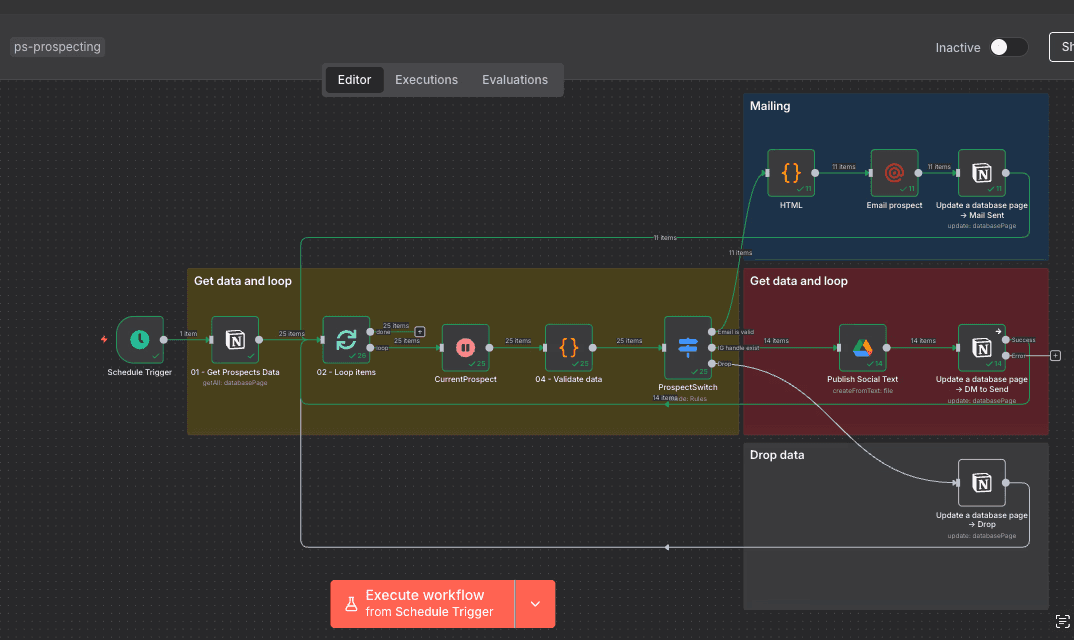
Leads come from various sources like emails, contact forms, DMs, calendar links, events, and newsletter sign-ups. There’s interest, but the missing piece is the internal architecture that can turn that interest into predictable results. Marketing amplifies what’s already working, but when the underlying systems are inconsistent, scattered, or fragile, visibility simply increases the volume of unprocessed demand.

This isn’t a marketing problem; it’s a systems problem.

01. Opening Insight

Most startups misinterpret the source of their slowdown. When metrics flatten or conversations stall, the immediate assumption is that traction has weakened — that the market is quiet, the messaging is off, or the product has lost momentum. In reality, the The problem is rarely a shortage of interest. Early demand almost always exists, but it manifests in small, fragmented signals that indicate a young company is not structurally prepared to handle it. These signals include scattered inquiries, half-completed forms, unanswered emails, dormant DMs, and unreviewed sign-ups.

What appears to be a marketing issue is usually an operating issue. The organization lacks the internal systems to convert these signals into actionable movement. These systems should include a predictable way to capture, qualify, prioritize, and follow up on leads. Without this underlying architecture, even genuine interest can dissipate before it becomes evident in metrics.

Growth does not fail because the surface is quiet. It fails because the system beneath it cannot support the attention it already receives.

02. Why the Misdiagnosis Happens

Founders often assume marketing is the source of momentum because it’s the most visible lever. When activity slows, the instinct is to produce more content, publish more frequently, or launch new campaigns. This reaction is understandable: marketing outputs are tangible and create the impression of progress. However, early-stage demand rarely appears as a clean, continuous stream. Instead, it manifests in small fragments—a brief email inquiry, a direct message with intent, a sign-up that never replies, a form submission with missing context, or a conversation that ends without a defined next step.

These signals are easy to underestimate because none of them feels like “real traction” on their own. They arrive unevenly across different channels and at unpredictable times. Without a consistent internal mechanism to collect, review, and advance them, they fade unnoticed. Momentum deteriorates quietly, not because the market has lost interest, but because the organization lacks a stable way to manage the interest that does appear.

03. Underlying System Dysfunction

Several recurring structural gaps create the impression that a startup lacks traction, even when interest is present.

1. Inbound signals are scattered across too many channels
Early-stage teams receive information in multiple places — email threads, LinkedIn messages, WhatsApp conversations, Instagram DMs, event introductions, personal calendars, newsletter tools, or ad platform inboxes. Each interaction lives in its own environment, and nothing brings these signals together. Without a single intake point or a standard way of logging them, most signals are acknowledged once and then forgotten. The organisation cannot form a coherent view of what is actually happening.

2. Qualification varies from case to case
Founders often treat all enquiries the same, regardless of their stage, intent, or constraints. Some leads are exploratory, some are urgent, some are unclear, and some are not a fit — but the team has no lightweight model to distinguish them. As a result, every new conversation feels equally demanding, and follow-through becomes inconsistent because the team cannot prioritise. Operational fatigue sets in quickly when everything looks like an opportunity but nothing has a defined path.

3. Follow-through depends on memory, not process
Even strong signals decay if there is no predictable rhythm of re-engagement. Many conversations end with “let’s revisit this,” but there is no mechanism to ensure the revisit actually happens. The pipeline may appear full on paper, yet very little progresses because each next step relies on someone remembering to act. Over time, the gap between perceived pipeline volume and actual movement widens, creating a misleading sense of stagnation.

These patterns are not related to marketing quality or demand generation.
They are the result of an incomplete operating structure.

04. Architecture of a Working System

A. A Single, Predictable Intake Path

Early interest enters through many places — email, LinkedIn, Twitter, WhatsApp, Instagram, events, warm intros.
None of these channels are the problem.
The issue is the absence of a defined route once a signal appears.

A functional system has:

  • One preferred entry point (form, link, or email)

  • Clear redirection rules (“Great — here is the place to send this so I don’t lose it”)

  • A habit of logging stray signals into the central hub within the same day

This creates a consistent way of collecting information, regardless of where the conversation began.

It removes the reliance on memory, screenshots, and scattered follow-ups.

B. A Lightweight Qualification Model

Young teams often treat all enquiries the same, which leads to fatigue and unclear prioritisation.

A practical qualification model uses three or four signals:

  • Timeline — when the person hopes to start

  • Intent — clarity of their objective or need

  • Fit — whether this aligns with your current scope

  • Next Action — call, document, quote, referral, follow-up

This model does not require a CRM.
It can live inside one Notion table.
The point is to recognise patterns and reduce guesswork.

Qualification creates focus, not bureaucracy.

C. A Follow-Through Rhythm

Many conversations fade simply because there is no predictable cadence attached to them. Teams rely on intuition or emotional urgency instead of structure.

A healthy follow-through rhythm includes:

  • Immediate acknowledgment
    A short reply so the person feels seen.

  • A clarifying question
    One line that sharpens context.

  • A defined next step
    Call? Link? Document? Intro? Decision?

  • Periodic re-engagement
    Weekly or bi-weekly check-ins tied to behaviour, not pressure.

This rhythm prevents drift.
It makes the pipeline move without depending on bursts of energy.

D. A Centralised Source of Truth

Every signal must eventually land in one place so the organisation can see what is actually happening.

This hub can be:

It contains:

  • all active conversations

  • all captured signals

  • all pending next steps

  • all dates for re-engagement

This is where weekly reviews happen.
This is where the team sees real progress.
This is where momentum becomes visible.

When everything lives in one place, priorities stop shifting randomly and decisions become easier.

Why this matters

A working system doesn’t look complex.
It looks steady.

Steady systems turn scattered signals into forward motion.
Steady systems reveal real traction.
Steady systems protect the founder from cognitive overload.

This architecture is the difference between feeling “stuck” and moving with intention.

05. Consequence of Ignoring It

When this architecture is missing, a startup experiences the same pattern regardless of industry:

  • pipelines appear “full” but do not move

  • weeks pass without meaningful follow-through

  • marketing feels ineffective even when interest exists

  • founders lose confidence in their direction

  • investors see inconsistency rather than traction

  • teams waste time revisiting the same conversations

  • valuable relationships fade due to timing, not intent

Momentum decays in silence.
Not because people aren’t interested — but because the system didn’t hold them long enough.

06. What “Good” Looks Like

A functioning early-stage system does not feel complex.
It feels predictable.

  • All inbound interest enters one place.

  • Every conversation has a clear next step.

  • Qualification happens quickly and calmly.

  • Follow-up is automatic in rhythm, not necessarily in tooling.

  • Newsletter sign-ups are nurtured, even with short emails.

  • Lead decay slows dramatically.

  • Decisions are based on reality, not memory.

The system supports the founder, not the reverse.

When this architecture is in place, marketing becomes a multiplier rather than a distraction.

07. Diagnostic Question

Every team has a point where momentum fades.
Sometimes it happens at the moment a message arrives.
Sometimes during qualification.
Sometimes after the first conversation.
Sometimes when nothing in the system reminds you to return to it.

To understand your architecture, start with one concrete moment:

Where in your current workflow does interest quietly disappear — at intake, qualification, or follow-through?

If you share a recent example — one email, one DM, one sign-up that drifted away — I can map the exact point where the system let it go and outline the most effective next step to stabilise it.

A single real case often reveals the entire structure.

If you want to see how a simple architecture can support momentum, this page gives a clear overview:
How it could work for you
Leads come from various sources like emails, contact forms, DMs, calendar links, events, and newsletter sign-ups. There’s interest, but the missing piece is the internal architecture that can turn that interest into predictable results. Marketing amplifies what’s already working, but when the underlying systems are inconsistent, scattered, or fragile, visibility simply increases the volume of unprocessed demand.

This isn’t a marketing problem; it’s a systems problem.

01. Opening Insight

Most startups misinterpret the source of their slowdown. When metrics flatten or conversations stall, the immediate assumption is that traction has weakened — that the market is quiet, the messaging is off, or the product has lost momentum. In reality, the The problem is rarely a shortage of interest. Early demand almost always exists, but it manifests in small, fragmented signals that indicate a young company is not structurally prepared to handle it. These signals include scattered inquiries, half-completed forms, unanswered emails, dormant DMs, and unreviewed sign-ups.

What appears to be a marketing issue is usually an operating issue. The organization lacks the internal systems to convert these signals into actionable movement. These systems should include a predictable way to capture, qualify, prioritize, and follow up on leads. Without this underlying architecture, even genuine interest can dissipate before it becomes evident in metrics.

Growth does not fail because the surface is quiet. It fails because the system beneath it cannot support the attention it already receives.

02. Why the Misdiagnosis Happens

Founders often assume marketing is the source of momentum because it’s the most visible lever. When activity slows, the instinct is to produce more content, publish more frequently, or launch new campaigns. This reaction is understandable: marketing outputs are tangible and create the impression of progress. However, early-stage demand rarely appears as a clean, continuous stream. Instead, it manifests in small fragments—a brief email inquiry, a direct message with intent, a sign-up that never replies, a form submission with missing context, or a conversation that ends without a defined next step.

These signals are easy to underestimate because none of them feels like “real traction” on their own. They arrive unevenly across different channels and at unpredictable times. Without a consistent internal mechanism to collect, review, and advance them, they fade unnoticed. Momentum deteriorates quietly, not because the market has lost interest, but because the organization lacks a stable way to manage the interest that does appear.

03. Underlying System Dysfunction

Several recurring structural gaps create the impression that a startup lacks traction, even when interest is present.

1. Inbound signals are scattered across too many channels
Early-stage teams receive information in multiple places — email threads, LinkedIn messages, WhatsApp conversations, Instagram DMs, event introductions, personal calendars, newsletter tools, or ad platform inboxes. Each interaction lives in its own environment, and nothing brings these signals together. Without a single intake point or a standard way of logging them, most signals are acknowledged once and then forgotten. The organisation cannot form a coherent view of what is actually happening.

2. Qualification varies from case to case
Founders often treat all enquiries the same, regardless of their stage, intent, or constraints. Some leads are exploratory, some are urgent, some are unclear, and some are not a fit — but the team has no lightweight model to distinguish them. As a result, every new conversation feels equally demanding, and follow-through becomes inconsistent because the team cannot prioritise. Operational fatigue sets in quickly when everything looks like an opportunity but nothing has a defined path.

3. Follow-through depends on memory, not process
Even strong signals decay if there is no predictable rhythm of re-engagement. Many conversations end with “let’s revisit this,” but there is no mechanism to ensure the revisit actually happens. The pipeline may appear full on paper, yet very little progresses because each next step relies on someone remembering to act. Over time, the gap between perceived pipeline volume and actual movement widens, creating a misleading sense of stagnation.

These patterns are not related to marketing quality or demand generation.
They are the result of an incomplete operating structure.

04. Architecture of a Working System

A. A Single, Predictable Intake Path

Early interest enters through many places — email, LinkedIn, Twitter, WhatsApp, Instagram, events, warm intros.
None of these channels are the problem.
The issue is the absence of a defined route once a signal appears.

A functional system has:

  • One preferred entry point (form, link, or email)

  • Clear redirection rules (“Great — here is the place to send this so I don’t lose it”)

  • A habit of logging stray signals into the central hub within the same day

This creates a consistent way of collecting information, regardless of where the conversation began.

It removes the reliance on memory, screenshots, and scattered follow-ups.

B. A Lightweight Qualification Model

Young teams often treat all enquiries the same, which leads to fatigue and unclear prioritisation.

A practical qualification model uses three or four signals:

  • Timeline — when the person hopes to start

  • Intent — clarity of their objective or need

  • Fit — whether this aligns with your current scope

  • Next Action — call, document, quote, referral, follow-up

This model does not require a CRM.
It can live inside one Notion table.
The point is to recognise patterns and reduce guesswork.

Qualification creates focus, not bureaucracy.

C. A Follow-Through Rhythm

Many conversations fade simply because there is no predictable cadence attached to them. Teams rely on intuition or emotional urgency instead of structure.

A healthy follow-through rhythm includes:

  • Immediate acknowledgment
    A short reply so the person feels seen.

  • A clarifying question
    One line that sharpens context.

  • A defined next step
    Call? Link? Document? Intro? Decision?

  • Periodic re-engagement
    Weekly or bi-weekly check-ins tied to behaviour, not pressure.

This rhythm prevents drift.
It makes the pipeline move without depending on bursts of energy.

D. A Centralised Source of Truth

Every signal must eventually land in one place so the organisation can see what is actually happening.

This hub can be:

It contains:

  • all active conversations

  • all captured signals

  • all pending next steps

  • all dates for re-engagement

This is where weekly reviews happen.
This is where the team sees real progress.
This is where momentum becomes visible.

When everything lives in one place, priorities stop shifting randomly and decisions become easier.

Why this matters

A working system doesn’t look complex.
It looks steady.

Steady systems turn scattered signals into forward motion.
Steady systems reveal real traction.
Steady systems protect the founder from cognitive overload.

This architecture is the difference between feeling “stuck” and moving with intention.

05. Consequence of Ignoring It

When this architecture is missing, a startup experiences the same pattern regardless of industry:

  • pipelines appear “full” but do not move

  • weeks pass without meaningful follow-through

  • marketing feels ineffective even when interest exists

  • founders lose confidence in their direction

  • investors see inconsistency rather than traction

  • teams waste time revisiting the same conversations

  • valuable relationships fade due to timing, not intent

Momentum decays in silence.
Not because people aren’t interested — but because the system didn’t hold them long enough.

06. What “Good” Looks Like

A functioning early-stage system does not feel complex.
It feels predictable.

  • All inbound interest enters one place.

  • Every conversation has a clear next step.

  • Qualification happens quickly and calmly.

  • Follow-up is automatic in rhythm, not necessarily in tooling.

  • Newsletter sign-ups are nurtured, even with short emails.

  • Lead decay slows dramatically.

  • Decisions are based on reality, not memory.

The system supports the founder, not the reverse.

When this architecture is in place, marketing becomes a multiplier rather than a distraction.

07. Diagnostic Question

Every team has a point where momentum fades.
Sometimes it happens at the moment a message arrives.
Sometimes during qualification.
Sometimes after the first conversation.
Sometimes when nothing in the system reminds you to return to it.

To understand your architecture, start with one concrete moment:

Where in your current workflow does interest quietly disappear — at intake, qualification, or follow-through?

If you share a recent example — one email, one DM, one sign-up that drifted away — I can map the exact point where the system let it go and outline the most effective next step to stabilise it.

A single real case often reveals the entire structure.

If you want to see how a simple architecture can support momentum, this page gives a clear overview:
How it could work for you

Want this working in your setup?

Let's discuss your project. Tell us what you think causes pain to your business and we'll provide you a simple strategy.